What Is Ashitaba?
A research-based overview of Angelica keiskei — the Japanese plant known for its rare chalcone compounds and centuries of traditional use as a longevity food.

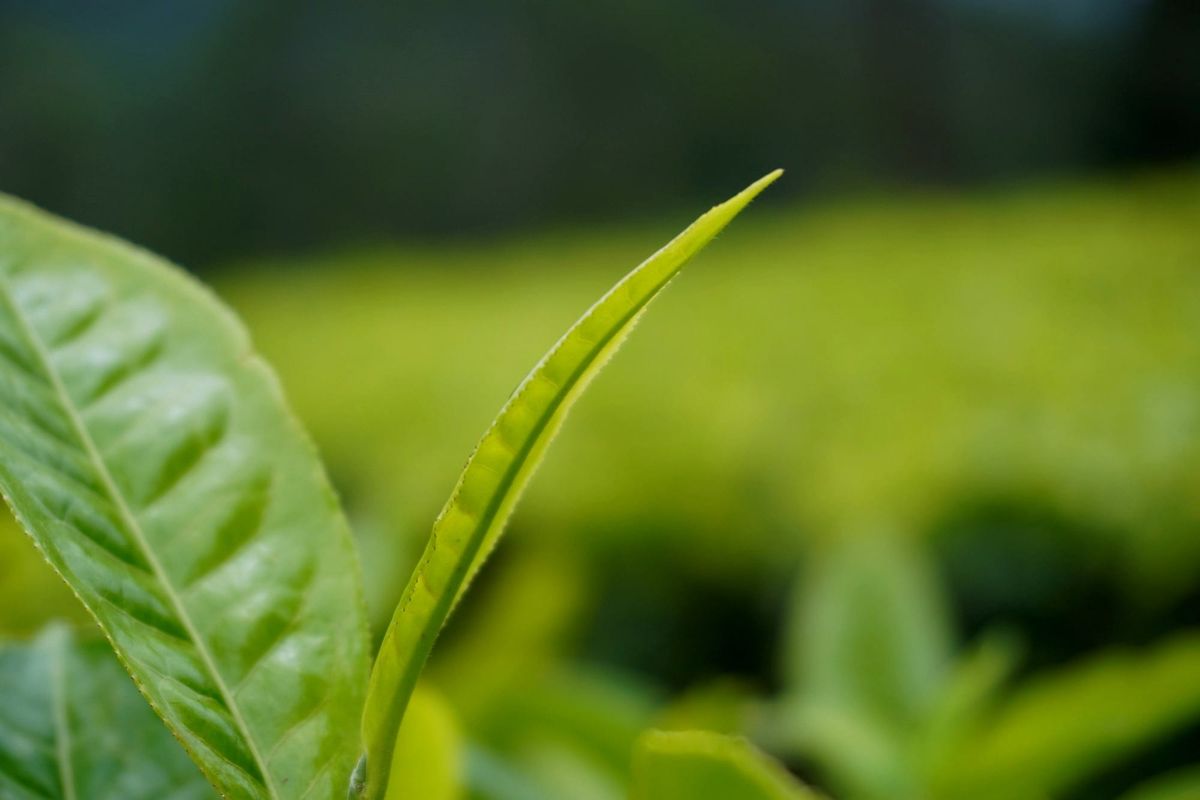
Quick Answer: Ashitaba (Angelica keiskei) is a Japanese perennial plant in the carrot family, native to the Izu Islands and consumed as food and medicine for over 400 years. It is the only known plant containing significant levels of two chalcone compounds — 4-hydroxyderricin and xanthoangelol — which have been studied for effects on autophagy, metabolism, and cellular longevity. Most published research is preclinical; human clinical trial data remains limited.
A Research-Based Overview
Ashitaba (Angelica keiskei)
| Scientific name | Angelica keiskei Koidzumi |
| Family | Apiaceae |
| Origin | Izu Islands, Japan |
| Active compounds | Chalcones (4-hydroxyderricin, xanthoangelol) |
| Parts used | Leaves, stems, roots |
| Common forms | Powder, capsule, tea, extract |
| Research focus | Autophagy, longevity, anti-inflammatory pathways |
Ashitaba (Angelica keiskei) is a perennial plant native to Japan's Izu Islands, where it has been consumed as both food and medicine for several centuries. The plant belongs to the Apiaceae family — the same botanical family as carrots, celery, and parsley — and is distinguished by its rapid regrowth after harvesting, a property reflected in its Japanese name: ashitaba (明日葉) translates roughly as "tomorrow's leaf."[1]
Scientific interest in ashitaba accelerated following the identification of its primary bioactive compounds — a class of flavonoids called chalcones, specifically 4-hydroxyderricin and xanthoangelol — which are found in significant concentrations almost exclusively in this plant.[2] Subsequent research has investigated these chalcones in relation to autophagy activation, metabolic regulation, anti-inflammatory pathways, and nerve growth factor (NGF) stimulation.
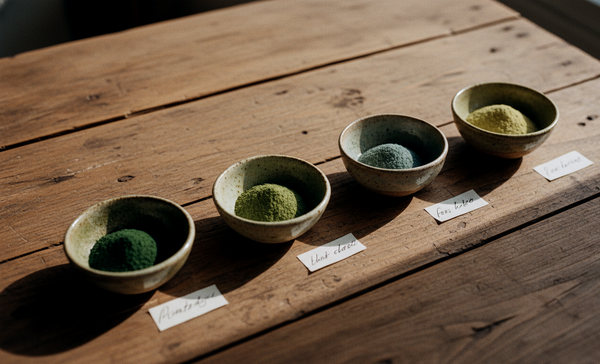
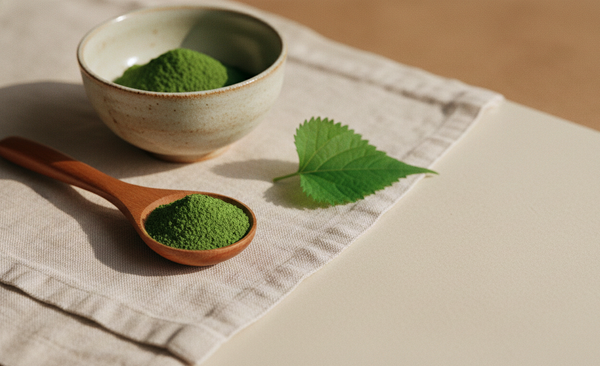
Ashitaba powder is produced by drying and grinding the plant's leaves and stems. It is used as a dietary supplement, most commonly mixed into beverages or foods, and is available through specialty supplement retailers and Japanese health product suppliers.
Contents
- History and Traditional Use
- Botanical Characteristics
- Active Compounds
- Research Overview
- Available Forms
- Sourcing and Quality
- Safety Considerations
- References
1. History and Traditional Use
Ashitaba has been cultivated and consumed in Japan's Izu Islands for at least 400 years, with historical records indicating its use as a longevity food among island populations.[3] The plant was historically consumed as a vegetable — steamed, sautéed, or eaten raw — and prepared as an herbal tea believed to support general vitality and digestive health.
Traditional Japanese medicine (Kampo) incorporated ashitaba primarily for its purported effects on circulation, digestion, and recovery from fatigue. The Izu Islands, particularly Hachijojima, developed a cultural association between ashitaba consumption and the notable longevity observed among island residents — though the degree to which diet contributed to this longevity remains a subject of ongoing research rather than established fact.[4]
Western scientific interest in ashitaba began in earnest in the 1990s, following Japanese laboratory identification of the chalcone compounds responsible for the plant's distinctive yellow sap. The isolation and characterization of 4-hydroxyderricin and xanthoangelol provided a biochemical basis for investigating the traditional health claims associated with the plant.
2. Botanical Characteristics
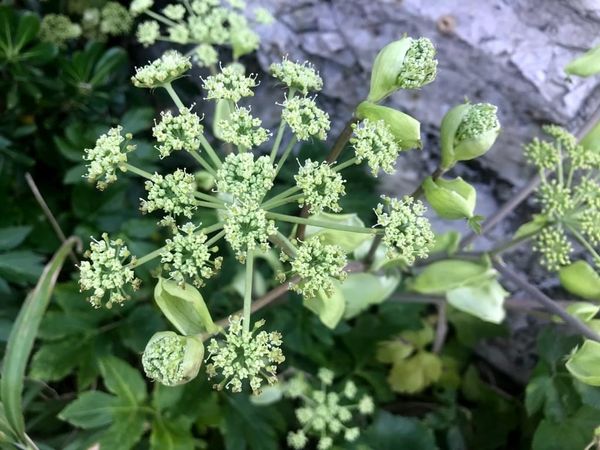
Ashitaba is a robust perennial herb that typically grows to 50–120 cm in height. Its leaves are large, compound, and dark green, with a glossy surface. The plant produces small white flowers arranged in compound umbels, characteristic of the Apiaceae family. A distinguishing feature is the yellow sap that exudes from cut stems — this sap contains the highest concentration of chalcone compounds.[5]
| Characteristic | Detail |
|---|---|
| Growth habit | Perennial herb; regrows rapidly after cutting |
| Height | 50–120 cm |
| Leaf type | Large, pinnately compound, dark green |
| Flower | Small white, compound umbel |
| Distinctive feature | Yellow sap from cut stems (high chalcone content) |
| Primary growing regions | Izu Islands (Japan), Hawaii (USA), limited cultivation elsewhere |
| Harvest cycle | Year-round in suitable climates; leaves harvested before flowering |
The plant thrives in mild, humid climates with mineral-rich volcanic soil — conditions that are optimally present in the Izu Islands. Research comparing chalcone concentrations across growing regions has found that Izu Islands-grown ashitaba consistently produces higher levels of 4-hydroxyderricin and xanthoangelol than plants cultivated in other regions, including Hawaii.[6]
3. Active Compounds
The primary bioactive constituents of ashitaba are two chalcone-type flavonoids: 4-hydroxyderricin and xanthoangelol. Chalcones are a subclass of flavonoids characterized by an open-chain structure, distinguishing them from other flavonoid classes such as flavones and isoflavones. These compounds are present in the leaves, stems, and roots of the plant, with the highest concentrations found in the yellow sap of the stem.[2]
3.1 4-Hydroxyderricin
4-Hydroxyderricin has been the subject of research investigating its role in autophagy induction, anti-inflammatory activity, and metabolic regulation. In vitro and animal studies have explored its potential to activate AMPK (adenosine monophosphate-activated protein kinase) pathways, which play a central role in cellular energy homeostasis and are associated with longevity mechanisms.[7]
3.2 Xanthoangelol
Xanthoangelol has been investigated primarily for anti-inflammatory and neuroprotective properties. Studies have examined its potential to stimulate nerve growth factor (NGF) synthesis, which is relevant to neurological health and cognitive function research.[8] Additional research has explored xanthoangelol's effects on adipogenesis and blood glucose regulation in animal models.
3.3 Additional Compounds
Beyond the primary chalcones, ashitaba contains a range of secondary bioactive constituents including coumarins, furanocoumarins, chlorophyll, vitamins B12 and C, and various minerals. The relative contribution of these secondary compounds to the plant's overall biological activity remains incompletely characterized in the published literature.
4. Research Overview
The majority of published research on ashitaba and its chalcone compounds has been conducted in Japan, primarily using in vitro (cell culture) and animal models. Human clinical trial data remains limited, and most health benefit claims associated with ashitaba should be understood in the context of preclinical research rather than established clinical evidence.[9]
| Research Area | Primary Compound | Evidence Level | Notes |
|---|---|---|---|
| Autophagy activation | 4-Hydroxyderricin | Preclinical (animal) | AMPK pathway activation observed in rodent models |
| Anti-inflammatory activity | Both chalcones | Preclinical (in vitro) | Inhibition of inflammatory cytokines in cell culture |
| Nerve growth factor stimulation | Xanthoangelol | Preclinical (in vitro) | NGF synthesis increase observed in cell models |
| Blood glucose regulation | Xanthoangelol | Preclinical (animal) | Glucose tolerance improvement in diabetic mouse models |
| Anti-obesity effects | 4-Hydroxyderricin | Preclinical (animal) | Reduced adipogenesis in high-fat diet mouse models |
A notable 2017 study published in Nature Communications identified ashitaba chalcones as autophagy-inducing compounds in both animal and preliminary human cell models, generating significant academic interest in the plant's potential longevity applications.[10] This research is frequently cited in discussions of ashitaba's mechanisms but should not be interpreted as clinical evidence of longevity benefits in humans.
5. Available Forms
Ashitaba is commercially available in several forms, each with different characteristics relevant to bioavailability, convenience, and intended use.
| Form | Description | Typical Use |
|---|---|---|
| Powder | Dried and ground leaves/stems; green in color | Mixed into water, smoothies, or food |
| Capsule | Encapsulated powder or extract | Standardized dosing; convenient |
| Tea | Dried leaf pieces for infusion | Traditional preparation method |
| Extract | Concentrated liquid or powder; may be standardized to chalcone content | Research applications; higher potency |
| Fresh plant | Raw leaves and stems | Culinary use; limited outside Japan |
Powder form is the most widely available outside Japan and is the format most commonly used in supplementation protocols referenced in the research literature. Standardization of chalcone content varies significantly between suppliers and is not universally disclosed on product labels.
6. Sourcing and Quality
The quality of ashitaba powder varies considerably across commercial products. Key variables affecting quality include geographic origin, harvest timing, processing temperature, and whether the product has been tested for chalcone concentration.[6]
Products sourced from Japan's Izu Islands are generally considered the reference standard, based on research indicating higher chalcone concentrations from volcanic soil conditions in that region. Low-temperature drying (below 40°C) is associated with better preservation of heat-sensitive chalcone compounds compared to high-heat processing methods.
Third-party laboratory testing for chalcone content, heavy metals, and microbial contamination is the most reliable indicator of product quality. Consumers are advised to request or verify the availability of a Certificate of Analysis (COA) before purchasing any ashitaba supplement.
Sourcing note: The ashitaba powder evaluated and recommended on this site is sourced from Japan's Izu Islands, processed at low temperature, and backed by third-party lab documentation. View full product details and lab reports →
7. Safety Considerations
Ashitaba has a long history of consumption as a food in Japan and is generally regarded as safe for healthy adults when consumed in typical dietary amounts. Clinical safety data for supplemental doses is limited, and the following considerations are based on available literature and known pharmacological properties of the plant's constituents.[9]
7.1 Known Contraindications
Ashitaba belongs to the Apiaceae family, which includes plants known to cause photosensitivity reactions due to furanocoumarin content. Individuals with known sensitivity to plants in this family (including celery, parsley, or fennel) should exercise caution. Furanocoumarins may interact with certain medications metabolized by the CYP3A4 enzyme pathway, including some statins and immunosuppressants.
7.2 Pregnancy and Lactation
Insufficient safety data exists for ashitaba supplementation during pregnancy or lactation. Use during these periods is not recommended without consultation with a qualified healthcare provider.
7.3 Drug Interactions
Preliminary research suggests potential interactions with blood glucose-lowering medications and anticoagulants, based on the plant's observed effects on glucose metabolism and platelet function in animal models. Individuals taking prescription medications should consult a healthcare provider before beginning ashitaba supplementation.
References
- Kil YS, et al. Angelica keiskei, an emerging medicinal herb with various bioactive constituents and biological activities. Arch Pharm Res. 2017;40(6):655-675. PubMed 28439780
- Chalcone identification and biological activity, Angelica keiskei. PubMed 40117946
- Traditional use and botanical overview, Angelica keiskei. PubMed 39924833
- Longevity and phytochemical studies, Angelica keiskei. PubMed 20938990
- Botanical characterization and compound analysis, Angelica keiskei. PubMed 38357325
- Regional chalcone concentration and growing conditions. PubMed 37047555
- 4-Hydroxyderricin and AMPK pathway activation. PubMed 37702279
- Xanthoangelol and nerve growth factor stimulation. PubMed 31658768
- Ashitaba safety and clinical overview. PubMed 38357325
- Nature Communications autophagy study, chalcone compounds. PubMed 23132631
- Chalcone bioavailability and processing. PubMed 36632211
- Antioxidant activity, Angelica keiskei chalcones. PubMed 39158346
- Phytochemical and pharmacological review, Angelica keiskei. PubMed 23681764
Disclaimer: The information on this page is provided for educational purposes only and is not intended as medical advice. These statements have not been evaluated by the Food and Drug Administration. Ashitaba powder is not intended to diagnose, treat, cure, or prevent any disease. Consult a qualified healthcare provider before beginning any supplementation protocol.
Recommended Source
Sun Potion sources their ashitaba from Taiwan and tests for chalcone content. It's the supplier we trust enough to send readers to.
Buy Ashitaba Powder →We earn a commission on purchases. This relationship does not influence our editorial.