Ashitaba vs. Alternatives
How does ashitaba powder compare to moringa, spirulina, chlorella, and matcha? A side-by-side look at the compounds, evidence, and use cases.

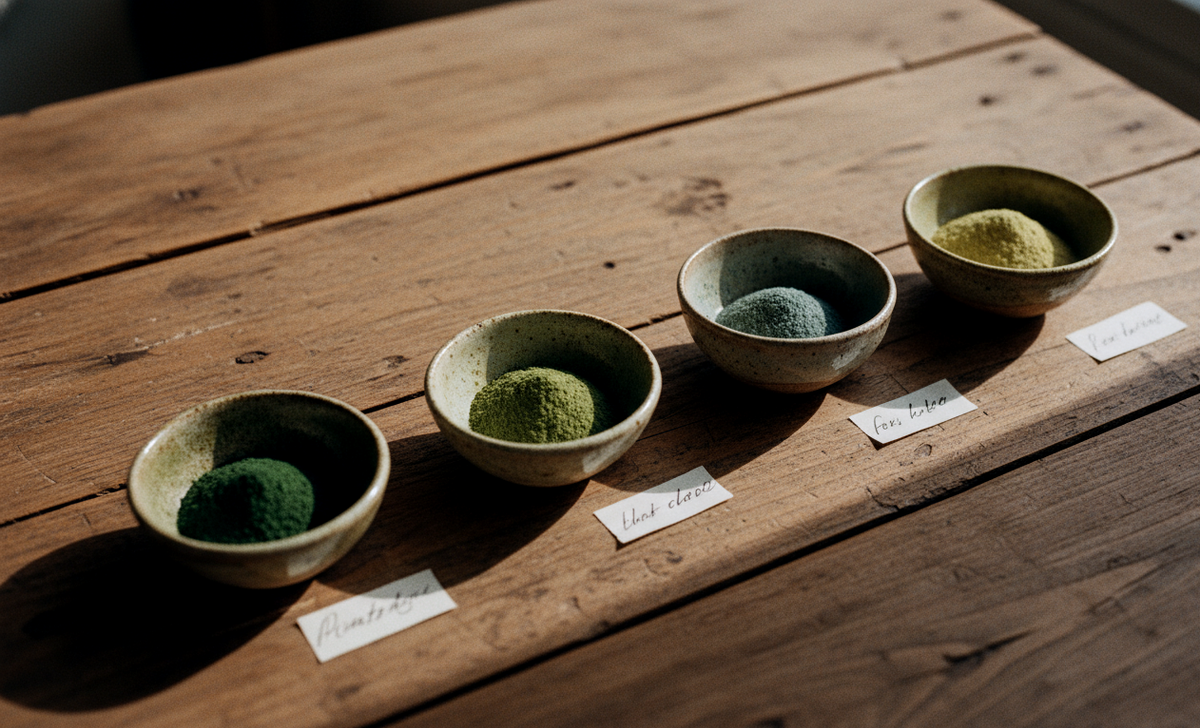
Quick Answer: Ashitaba is not directly interchangeable with moringa, spirulina, chlorella, wheatgrass, or matcha — they are different plants with different active compounds. Ashitaba's distinguishing feature is its chalcone content (4-hydroxyderricin and xanthoangelol), which is found almost exclusively in this plant. The right choice depends on what you're trying to support, not which is universally "better."
Ashitaba Powder vs. Alternatives: A Comparative Research Overview
| Compounds compared | Chalcones vs. isothiocyanates, phycocyanin, chlorophyll |
| Unique to ashitaba | 4-Hydroxyderricin, xanthoangelol |
| Alternatives covered | Moringa, spirulina, wheatgrass |
| Evidence basis | Peer-reviewed literature |
| Related pages | Benefits · Dosage |
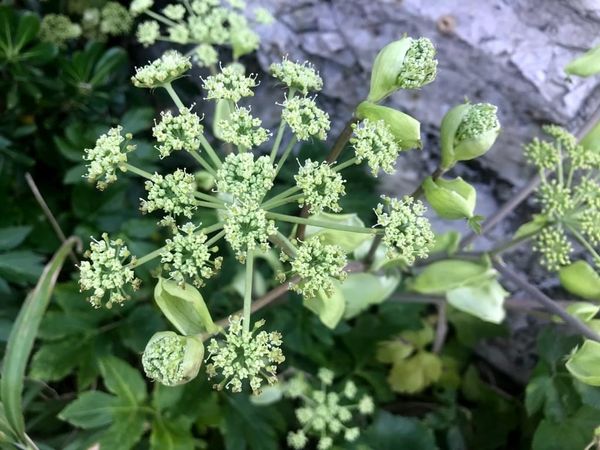
Consumers evaluating green superfood powders frequently compare ashitaba (Angelica keiskei) against better-known alternatives including moringa (Moringa oleifera), spirulina (Arthrospira platensis), and wheatgrass (Triticum aestivum). Each of these supplements has a distinct bioactive profile, body of research, and traditional use history.
This page provides a structured, research-referenced comparison of ashitaba powder against each alternative across key dimensions: primary bioactive compounds, research depth, specific benefit areas, sourcing considerations, and practical use. The goal is to give readers sufficient information to make an informed decision based on their specific health priorities.[1]
It should be noted that these supplements are not mutually exclusive — they address overlapping but distinct biological pathways and are sometimes used in combination. This comparison is not intended to suggest that ashitaba is superior in all contexts, but rather to clarify where it is meaningfully differentiated.
Contents
- Master Comparison Table
- Ashitaba vs. Moringa
- Ashitaba vs. Spirulina
- Ashitaba vs. Wheatgrass
- What Makes Ashitaba Unique
- How to Choose
- References
1. Master Comparison Table
The following table summarizes key characteristics across all four supplements. Detailed comparisons follow in subsequent sections.
| Factor | Ashitaba | Moringa | Spirulina | Wheatgrass |
|---|---|---|---|---|
| Plant type | Flowering herb | Tree leaf | Cyanobacteria (algae) | Grass shoot |
| Primary bioactives | Chalcones (unique) | Isothiocyanates, quercetin | Phycocyanin, beta-carotene | Chlorophyll, SOD enzyme |
| Autophagy research | Yes (2017 Nature study) | Indirect only | Limited | None documented |
| Anti-inflammatory data | Yes (preclinical) | Yes (stronger evidence base) | Yes (preclinical + some clinical) | Limited |
| Protein content | Low | Moderate | High (60–70% by weight) | Low |
| Vitamin B12 | Present (rare for plants) | Negligible | Present (pseudovitamin form) | Negligible |
| NGF stimulation | Yes (xanthoangelol) | No | No | No |
| Research volume | Moderate (growing) | High | High | Moderate |
| Human clinical trials | Limited | Moderate | Most extensive | Limited |
| Geographic origin | Japan (Izu Islands) | Tropics (widely grown) | Worldwide (cultivated) | Worldwide (cultivated) |
| Taste profile | Mild, slightly bitter | Earthy, grassy | Strong, oceanic | Strong, grassy |
| Typical daily dose | 1–3g powder | 2–5g powder | 3–5g powder | 3–5g powder |

2. Ashitaba vs. Moringa
Moringa (Moringa oleifera) is the most extensively researched of ashitaba's common alternatives, with a significantly larger body of published literature including human clinical trials. Moringa's primary bioactives — isothiocyanates, quercetin, and chlorogenic acid — are distinct from ashitaba's chalcone compounds and act through different mechanisms.[2]
Where Moringa Has the Advantage
Moringa has more robust clinical evidence for blood sugar regulation, cholesterol reduction, and anti-inflammatory activity than ashitaba. Multiple small human trials have documented measurable effects on fasting blood glucose and lipid profiles in participants with type 2 diabetes or metabolic syndrome. This level of clinical validation does not yet exist for ashitaba.[3]
Moringa is also significantly higher in protein, iron, and calcium by weight — making it a more practical nutritional supplement for individuals seeking broad micronutrient support.
Where Ashitaba Has the Advantage
Ashitaba's chalcone compounds — specifically their documented role in autophagy activation via AMPK pathway stimulation — represent a mechanism that has no equivalent in moringa's bioactive profile. For individuals specifically interested in cellular longevity and autophagy-related research, ashitaba is the more targeted option.[4]
Ashitaba's NGF-stimulating activity via xanthoangelol is also absent in moringa's documented pharmacology, making ashitaba the more relevant choice for individuals focused on neurological health research.
Summary Verdict: Ashitaba vs. MoringaChoose moringa for broader nutritional support and stronger clinical evidence on metabolic markers. Choose ashitaba for autophagy-specific research interest, NGF stimulation, and cellular longevity mechanisms. The two supplements are complementary rather than directly competitive.
3. Ashitaba vs. Spirulina
Spirulina (Arthrospira platensis) is a cyanobacterium — technically not a plant — with one of the most extensive supplement research bases of any natural product. Its primary bioactive, phycocyanin, is a water-soluble pigment with documented antioxidant and anti-inflammatory properties across both preclinical and clinical studies.[5]
Where Spirulina Has the Advantage
Spirulina has the most extensive human clinical trial data of any supplement in this comparison, with documented effects on cholesterol, blood pressure, blood sugar, and exercise performance across multiple randomized controlled trials. Its protein content (60–70% by dry weight) makes it the only supplement in this group with meaningful value as a protein source.[6]
Where Ashitaba Has the Advantage
Spirulina's research profile is broad but does not include autophagy activation, NGF stimulation, or the specific AMPK-mediated longevity mechanisms documented for ashitaba chalcones. For individuals whose primary interest is cellular aging rather than general antioxidant or nutritional support, ashitaba's research profile is more directly relevant.[4]
Spirulina also contains a pseudovitamin B12 analog (pseudocobalamin) that is not bioavailable in the same way as true B12, whereas ashitaba's B12 content — while modest — is considered more biologically active.[7]
Summary Verdict: Ashitaba vs. SpirulinaChoose spirulina for the most clinically validated green supplement with protein content and broad antioxidant support. Choose ashitaba for autophagy and longevity-specific research interest. These supplements serve different primary purposes and are frequently used together.
4. Ashitaba vs. Wheatgrass
Wheatgrass (Triticum aestivum) is among the most widely consumed green powders globally, primarily for its chlorophyll content and general alkalizing reputation. Its bioactive profile — dominated by chlorophyll, superoxide dismutase (SOD), and various vitamins and minerals — is less specifically characterized than that of ashitaba, moringa, or spirulina.[8]
Where Wheatgrass Has the Advantage
Wheatgrass is widely available, inexpensive, and familiar to mainstream supplement consumers. Its chlorophyll content is among the highest of any common green supplement, and preliminary research has examined its potential role in hemoglobin synthesis support — a specific application not investigated for ashitaba.[9]
Where Ashitaba Has the Advantage
Ashitaba's chalcone compounds provide a level of bioactive specificity that wheatgrass cannot match. Wheatgrass has no documented autophagy-inducing, NGF-stimulating, or AMPK-activating compounds in its published research profile. For virtually all of ashitaba's primary research areas, wheatgrass offers no comparable mechanism or evidence base.[1]
Summary Verdict: Ashitaba vs. WheatgrassWheatgrass is a reasonable general greens supplement at low cost. Ashitaba is the more research-specific choice for consumers interested in cellular longevity, autophagy, or neurological health mechanisms. There is limited basis for direct comparison as they address largely different biological targets.
5. What Makes Ashitaba Unique
Across the supplements compared on this page, ashitaba is distinguished by three characteristics that are not replicated by any of its alternatives:
| Distinguishing Factor | Details | Found in Alternatives? |
|---|---|---|
| Chalcone compound profile | 4-Hydroxyderricin and xanthoangelol found in significant concentrations only in Angelica keiskei | No |
| Documented autophagy induction | AMPK pathway activation via chalcones; published in Nature Communications 2017 | No direct equivalent |
| NGF stimulation | Xanthoangelol-mediated NGF synthesis increase in astrocyte cell models | No (lion's mane mushroom has comparable but distinct mechanism) |
These three factors make ashitaba the most targeted option among common green powders for individuals specifically interested in longevity mechanisms, cellular health, and neurological research. They do not, however, make it a superior general supplement — moringa and spirulina both have stronger overall evidence bases and broader nutritional profiles.
6. How to Choose
The following decision framework is intended to help readers select the most appropriate supplement based on their primary health interests:
| Primary Interest | Recommended Supplement | Rationale |
|---|---|---|
| Cellular longevity and autophagy | Ashitaba | Only supplement with documented AMPK/autophagy mechanism |
| Neurological health, NGF | Ashitaba | Xanthoangelol NGF stimulation unique to ashitaba among green powders |
| Blood sugar and metabolic support | Moringa or Spirulina | Stronger clinical evidence base for metabolic markers |
| Protein supplementation | Spirulina | Only supplement in this group with meaningful protein content |
| General antioxidant support | Spirulina or Moringa | Higher research volume and clinical validation |
| General greens, low budget | Wheatgrass | Widely available, inexpensive, familiar |
| Broad micronutrient support | Moringa | Highest density of vitamins and minerals per gram |
Ready to evaluate ashitaba powder quality? Not all ashitaba powder is equivalent — origin, processing temperature, and chalcone content vary significantly across products. The Ashitaba Research page covers what to look for, or view the product we evaluate and recommend →
References
- Ashitaba chalcone overview and comparative review of green supplements. PubMed 35010932
- Moringa oleifera bioactive compounds and pharmacological review. PubMed 37229639
- Moringa clinical trials — blood glucose and lipid profile effects. PubMed 38852476
- Chalcone autophagy induction — AMPK mechanism unique to Angelica keiskei. PubMed 40877830
- Spirulina phycocyanin antioxidant and anti-inflammatory review. PubMed 36670495
- Spirulina clinical trials — cholesterol, blood pressure and metabolic markers. PubMed 27362442
- Vitamin B12 bioavailability comparison across plant sources. PubMed 37828495
- Wheatgrass bioactive profile and supplement review. PubMed 25849401
- Wheatgrass chlorophyll content and hemoglobin synthesis research. PubMed 40384636
Disclaimer: The information on this page is provided for educational purposes only and is not intended as medical advice. These statements have not been evaluated by the Food and Drug Administration. Ashitaba powder is not intended to diagnose, treat, cure, or prevent any disease. Consult a qualified healthcare provider before beginning any supplementation protocol.
Recommended Source
Sun Potion sources their ashitaba from Taiwan and tests for chalcone content. It's the supplier we trust enough to send readers to.
Buy Ashitaba Powder →We earn a commission on purchases. This relationship does not influence our editorial.